
Our team visits the Blue Mountains throughout the year. We have experienced this UNESCO World Heritage landscape in the summer, winter, and every season in between.
Each time of year brings something different, from changing scenery to different experiences. This season-by-season guide will help you decide the best time to go to the Blue Mountains.
What Each Season Looks Like
Autumn (March to May)
Temperature: March: 11.6–20.4°C, April: 8.8–16.9°C, May: 6.1–13.3°C
Crowds: Low to moderate
Autumn is one of our favourite times to visit the Blue Mountains. The weather is comfortable, and the gardens throughout Leura and Katoomba fill with shades of gold, red, and orange. The Three Sisters also look particularly beautiful in the soft afternoon light that autumn is known for.
It is an excellent time for walking and exploring. The cooler temperatures make longer walks much more enjoyable, while the fresh mountain air adds to the experience. Waterfalls are still flowing, and the bushland remains green. Many visitors find that April and May are great months to visit popular places like Echo Point, with fewer crowds after the holiday period.
Winter (June to August)
Temperature: June: 3.7–10.2°C, July: 2.6–9.5°C, August: 3.3–11.3°C
Crowds: Low to moderate, with busier periods during July school holidays and Yulefest weekends.
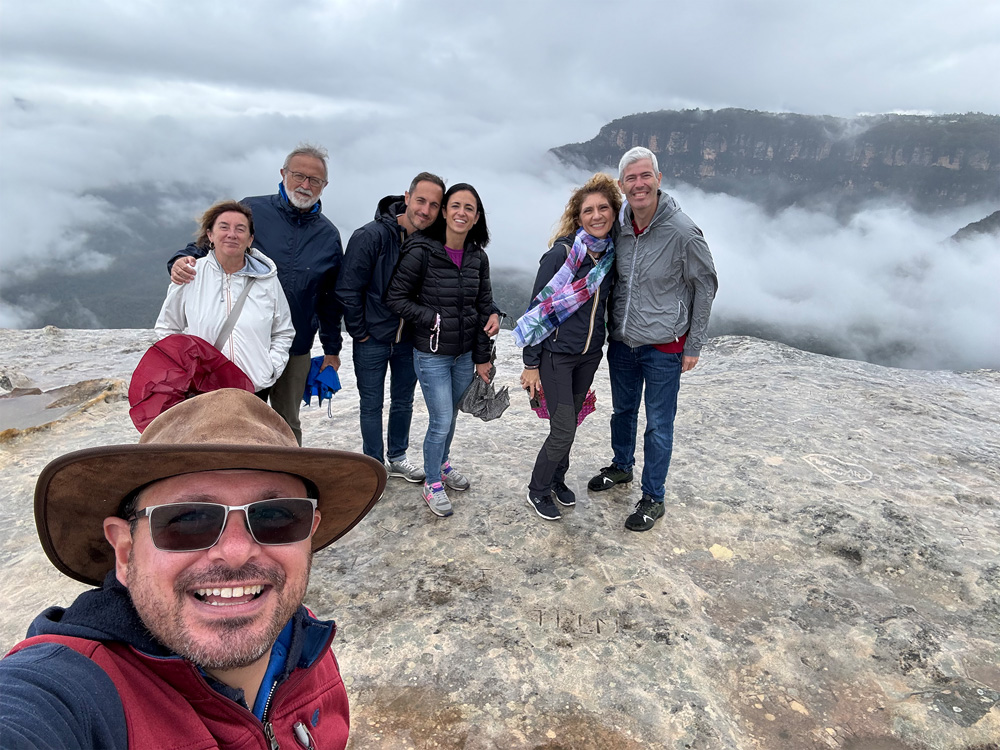
Winter brings a completely different feel to the Blue Mountains. Early mornings can bring frost to the lookouts, while mist settles across the valleys and creates some truly memorable views.
On the coldest days, the upper Blue Mountains can even receive a light dusting of snow. This is most common in higher towns such as Blackheath and Mount Victoria, and occasionally Katoomba. Also, seeing the Jamison Valley covered in fog is one of the region’s most impressive sights.
The mountain towns embrace the season as well. In Katoomba and Leura, visitors can warm up beside open fireplaces, enjoy a hot chocolate, and soak up the cosy atmosphere.
July also brings Yulefest, a popular Christmas in July celebration featuring festive meals, decorations, and crackling fires throughout the region.
If you are visiting in winter, make sure you dress for the conditions. Warm layers, a good jacket, and gloves will help you stay comfortable.
Spring (September to November)
Temperature: September: 5.5–14.8°C, October: 7.8–17.8°C, November: 9.9–20.5°C
Crowds: Moderate
Spring brings a fresh burst of colour to the Blue Mountains. Native wildflowers begin to bloom across the bushland, including waratahs, flannel flowers, and boronia, adding vibrant colours to walking tracks and lookouts throughout the region. It is also one of the best times to see the area’s waterfalls.
Spring is equally rewarding for wildlife lovers. Crimson rosellas, king parrots, and sulphur-crested cockatoos are commonly seen throughout the region. If you bring a pair of binoculars and keep an eye on the forest floor, you might even spot a lyrebird, famous for its remarkable ability to mimic the sounds around it.
If you want to see colourful wildflowers, flowing waterfalls, and abundant birdlife, spring is one of the best times to visit the Blue Mountains.
Summer (December to February)
Temperature: December: 11.8–22.6°C, January: 12.9–23.4°C, February: 13.0–22.5°C
Crowds: High
Summer is a popular time to visit the Blue Mountains, especially for those looking to escape Sydney’s heat. While the city can experience temperatures in the mid-30s, the mountains are much cooler.
The weather conditions attract more visitors, particularly during the Christmas and January school holiday period. Popular attractions and lookouts can become quite busy, especially in the middle of the day.
Summer’s longer daylight hours give you more time to explore, making it easier to enjoy walking trails, waterfalls, lookouts, and some of the quieter parts of the region in a single day.
So, When Is the Best Time to Go to the Blue Mountains?
If you are looking for one simple answer, autumn is the best time to visit the Blue Mountains. The weather is comfortable for walking, the scenery looks beautiful, and many of the popular lookouts are a little quieter. Spring is another great choice, especially if you want to see colourful wildflowers, green bushland, and waterfalls at their best.
The truth is that every season has something different to offer. The best time actually depends on what you want from your trip. Some people come for the misty mornings and cosy fireplaces of winter, while others love the fresh spring blooms, the cooler summer temperatures, or the golden colours that arrive in autumn.
When Can You Get the Best Photos?
The Blue Mountains can look completely different depending on the time of day, so the best time for photos depends on the type of scenery you want to capture.
For soft light and mist drifting through the valleys, early morning is the best choice. Echo Point and the Three Sisters are beautiful around sunrise, when the sandstone begins to glow, and the Jamison Valley is sometimes covered in layers of mist. It is also one of the most peaceful times to visit before the crowds arrive.
The middle of the day brings brighter and harsher light, but it can still be a great time for wide landscape photos. On clear days, the Blue Mountains’ famous blue haze is especially noticeable across the valleys and ridgelines. The haze is created when tiny droplets of eucalyptus oil mix with moisture and other particles in the air, scattering sunlight and giving the landscape its distinctive blue appearance.
If you are chasing warm light and dramatic scenery, late afternoon is one of the best times to have your camera ready. As the sun gets lower, the cliffs, valleys, and waterfalls take on a golden glow that adds depth and contrast to photos. Popular photography spots include Echo Point, Govetts Leap, Lincoln’s Rock, and Sublime Point, all of which offer spectacular views as the day draws to a close.
What You Need to Bring
Extra layers of clothing
The Blue Mountains are much cooler than Sydney, even on the same day. It is always a good idea to pack a jumper or light jacket, even during summer.
Comfortable walking shoes
Some attractions are easy to reach, while others involve bush tracks, stairs, or uneven ground. Shoes with good support and grip will make exploring much easier.
Drinking water and a few snacks
Many popular lookouts and walking trails take a little time to reach. Having water and something to eat on hand can make your day more enjoyable, especially in warmer weather.
Conclusion
The Blue Mountains offer beautiful landscapes and memorable views. Each season brings a different side of the region, but its natural beauty can be enjoyed year-round.
If you would like to make the most of your day, a Blue Mountains private tour can help you see the highlights at the right time, avoid the busiest crowds, and discover some of the quieter lookouts that many visitors miss. Contact Ready Steady Tour to start planning your adventure today!


